

Finding safe, effective ways to support skin and joint health can feel like a challenge, especially with so many options on the market. Collagen stands out as the most abundant protein in the human body, forming the foundation for strength, flexibility, and repair in skin, cartilage, and bones. By understanding the unique structure and role of collagen, you can make informed decisions on supplements that deliver visible benefits for youthful skin and flexible joints.
Table of Contents
- Collagen Explained: Structure and Body Functions
- Different Collagen Types and Their Uses
- Collagen’s Impact on Skin Elasticity and Joints
- How Collagen Supplements Support Wellness
- Quality, Efficacy, and Safety Considerations
Key Takeaways
| Point | Details |
|---|---|
| Collagen is Essential for Structural Integrity | It is the most abundant protein in the body, playing a crucial role in tissue strength and elasticity across various systems. |
| Types of Collagen Serve Unique Functions | Types I, II, and III are the most significant, contributing to the structure and functionality of skin, cartilage, and muscles. |
| Collagen Supplements Enhance Skin and Joint Health | Supplementation can improve skin elasticity and reduce joint pain, particularly in individuals with osteoarthritis. |
| Quality Matters in Supplement Selection | Ensure collagen supplements are sourced appropriately and undergo thorough third-party testing for efficacy and safety. |
Collagen Explained: Structure and Body Functions
Collagen represents the most abundant protein in the human body, serving as a critical structural foundation for numerous biological systems. Structural networks of protein fibrils form interconnected matrices that provide mechanical strength and elasticity across different tissues.
The fundamental building block of collagen involves unique triple helix structures composed of specific amino acid sequences. These intricate molecular configurations enable remarkable biomechanical properties, allowing collagen to support cell growth, tissue differentiation, and repair mechanisms. Each triple helix assembles into larger fibrillar networks that create robust connective tissue frameworks in skin, cartilage, bones, tendons, and ligaments.
Specifically, collagen proteins participate in multiple physiological processes beyond mere structural support. They regulate cellular interactions, facilitate wound healing, and maintain tissue integrity through complex biochemical signalling pathways. Collagen synthesis and degradation balance represents a dynamic process essential for maintaining healthy bodily functions and supporting overall cellular regeneration.
Pro tip: Consider incorporating collagen-rich foods like bone broth, fish, and egg whites to naturally support your body’s protein synthesis and tissue maintenance.
Different Collagen Types and Their Uses
Human physiology encompasses an intricate array of collagen types with specialised functions, representing a complex protein family essential for maintaining tissue integrity and performance. Among the 28 identified collagen varieties, types I, II, and III emerge as the most extensively studied and critically important for human health and biological processes.
Type I collagen predominates in structural tissues, providing remarkable tensile strength and rigidity to skin, bones, and tendons. This protein variant represents approximately 90% of the body’s collagen composition, forming dense, tightly packed fibres that contribute to tissue resilience. Type II collagen, by contrast, specialises in cartilage function, enabling joint flexibility and cushioning, while type III collagen works alongside type I to support muscle and skin elasticity, creating dynamic supporting networks throughout bodily systems.
Beyond these primary types, researchers have discovered additional collagen variants with unique physiological roles. Molecular distribution across tissue structures demonstrates how different collagen types contribute to vascular membranes, basement membrane configurations, and regenerative processes. These proteins play crucial roles in wound healing, tissue engineering, and maintaining cellular communication pathways, making them fundamental to biological repair and maintenance mechanisms.
Pro tip: Consider consuming a diverse protein diet featuring bone broth, fish, and lean meats to naturally support your body’s varied collagen type production.
The main collagen types differ notably in structure and biological function:
| Collagen Type | Principal Tissue Locations | Unique Properties | Main Physiological Role |
|---|---|---|---|
| Type I | Skin, bone, tendons | Dense, strong fibres | Provides tensile strength and rigidity |
| Type II | Cartilage | Flexible, shock-absorbing | Supports joint cushioning and movement |
| Type III | Muscles, blood vessels, skin | Elastic, forms supportive networks | Enhances tissue flexibility and repair |
Collagen’s Impact on Skin Elasticity and Joints
Clinical evidence from controlled trials demonstrates remarkable benefits of collagen supplementation for both skin health and joint function. The protein’s unique molecular structure enables profound improvements in tissue regeneration, addressing two critical areas of bodily wellness that typically decline with age.
In skin health, collagen plays a transformative role in maintaining elasticity and reducing visible signs of aging. Hydrolyzed collagen peptides stimulate fibroblast activity within the dermal layer, promoting increased skin hydration and significantly diminishing wrinkle formation. Research indicates that consistent supplementation can enhance skin moisture levels by up to 28%, creating a more youthful and resilient complexion that appears smoother and more radiant.

Parallel to its dermatological benefits, collagen exhibits remarkable potential in joint health management. Systematic reviews on collagen supplementation reveal substantial improvements in cartilage integrity and reduction of inflammatory responses. Individuals experiencing joint discomfort, particularly those with early-stage osteoarthritis, can potentially mitigate pain and improve mobility through targeted collagen intake, supporting the body’s natural regenerative processes and maintaining connective tissue strength.
Pro tip: Combine collagen supplementation with vitamin C rich foods to enhance protein absorption and maximise your body’s natural collagen synthesis.
How Collagen Supplements Support Wellness
Hydrolyzed collagen peptides provide remarkable molecular support for comprehensive wellness across multiple bodily systems. These specialised protein molecules are engineered to be easily absorbed, enabling targeted nutritional intervention that supports tissue regeneration, reduces inflammatory responses, and promotes overall physiological resilience.
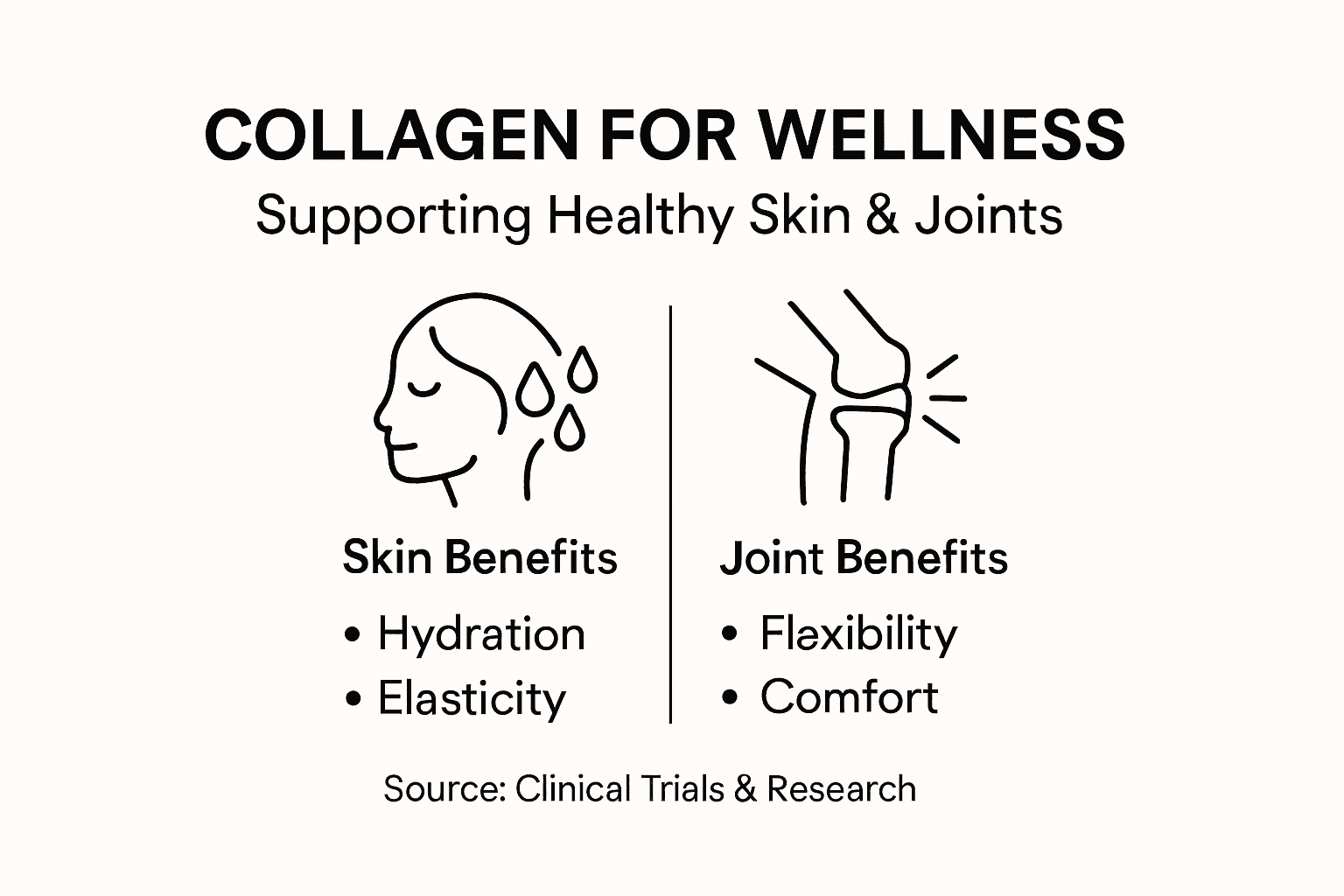
The supplementation process works through intricate biological mechanisms that stimulate the body’s natural collagen production. When ingested, these small peptide molecules trigger endogenous protein synthesis pathways, encouraging fibroblasts and chondrocytes to increase their collagen generation. This process leads to significant improvements in skin elasticity, joint mobility, and connective tissue strength, addressing age-related deterioration at a cellular level.
Bioactive peptides from bovine sources demonstrate particularly potent wellness benefits. Scientific research indicates these supplements can mitigate oxidative stress, support muscle recovery, enhance bone density, and provide comprehensive nutritional support for individuals experiencing age-related tissue degradation. By targeting multiple physiological systems simultaneously, collagen supplements offer a holistic approach to maintaining bodily wellness and structural integrity.
Pro tip: Select hydrolyzed collagen supplements with added vitamin C to maximise absorption and enhance your body’s natural protein synthesis capabilities.
Quality, Efficacy, and Safety Considerations
Advanced analytical techniques play a critical role in verifying the integrity and performance of collagen supplements. Sophisticated laboratory methods like high-performance liquid chromatography and enzyme-linked immunosorbent assays enable precise evaluation of collagen content, molecular weight, and specific protein subtypes, ensuring consumers receive high-quality nutritional products.
The efficacy of collagen supplements depends on multiple interconnected factors, including source quality, extraction methodology, and processing techniques. Different collagen sources—bovine, marine, or chicken—exhibit varying bioavailability and protein compositions, which directly influence their therapeutic potential. Consumers should prioritise supplements that provide transparent documentation about their origin, manufacturing processes, and third-party testing protocols.
Clinical studies demonstrate safety and potential benefits across multiple health domains, including osteoarthritis management, skin aging prevention, and post-exercise recovery. However, individual responses can vary significantly, underscoring the importance of consulting healthcare professionals before initiating any supplement regimen. Factors such as dosage, duration of use, and individual metabolic characteristics substantially impact overall supplement performance and potential health outcomes.
Pro tip: Always request detailed laboratory analysis reports and third-party certification when selecting collagen supplements to ensure maximum quality and safety.
Key factors determine the quality and efficacy of collagen supplements:
| Factor | Description | Impact on Effectiveness |
|---|---|---|
| Source quality | Origin (bovine, marine, etc.) | Influences bioavailability and safety |
| Extraction method | Hydrolysis, enzymatic processes | Affects absorption rate and purity |
| Third-party testing | Independent laboratory analysis | Verifies accuracy and consumer protection |
| Dosage consistency | Recommended intake and regimen | Ensures reliable health outcomes |
Enhance Your Skin and Joint Health with Premium Bovine Collagen
Struggling with declining skin elasticity or joint discomfort as you age is a common challenge experienced by many. The detailed insights from collagen’s role in wellness highlight how essential collagen’s tensile strength, elastic properties, and support for cartilage health are in maintaining youthful skin and flexible joints. If you want to support your body’s natural collagen synthesis and enjoy the benefits of enhanced tissue regeneration and reduced inflammation, choosing the right collagen supplement is key.
Discover the difference that high quality premium bovine collagen powder can make by exploring our Home page where purity and bioavailability are prioritised.

Act now to experience comprehensive wellness that targets both your skin and joints effectively. Visit Primedge, explore our exclusive Daily Deals, and take your first step towards revitalising your natural collagen levels with our premium supplements designed to help you feel confident and mobile every day.
Frequently Asked Questions
What is the main role of collagen in the body?
Collagen serves as the most abundant protein, providing structural support to skin, bones, cartilage, tendons, and ligaments, and playing a crucial role in tissue regeneration and cellular interactions.
How does collagen supplementation support skin health?
Collagen supplementation enhances skin elasticity, hydration, and reduces the appearance of wrinkles by stimulating fibroblast activity, which promotes increased moisture levels in the skin.
What are the benefits of collagen for joint health?
Collagen helps maintain joint function by supporting cartilage integrity and reducing inflammation, which can alleviate pain and improve mobility, especially in individuals with osteoarthritis.
How can I maximise the effectiveness of collagen supplements?
To enhance collagen absorption, consider taking hydrolysed collagen supplements with added vitamin C, as this vitamin aids in collagen synthesis and improves overall efficacy.



Leave a comment
This site is protected by hCaptcha and the hCaptcha Privacy Policy and Terms of Service apply.