

Every serious athlete knows that recovery sets the foundation for consistent progress and injury prevention. The search for science-backed solutions to strengthen joints and speed up muscle repair has led many towards collagen supplementation. Research highlights how collagen peptide supplementation combined with exercise improves fat-free mass, tendon structure, muscle architecture, and post-exercise recovery, giving athletes a tangible way to support their performance and stay in the game longer.
Table of Contents
- Collagen Explained For Athletic Performance
- Different Types Of Collagen And Their Roles
- Scientific Evidence: Collagen And Recovery
- Supporting Joint Health And Injury Prevention
- How To Use Collagen Effectively For Athletes
- Misconceptions And Safety Considerations
Key Takeaways
| Point | Details |
|---|---|
| Collagen Supports Performance | Collagen supplementation enhances muscle and tendon resilience and is vital for athletic performance and recovery. |
| Types of Collagen Matter | Different collagen types serve unique functions; Type I strengthens tendons, Type II supports cartilage, and Type III maintains tissue elasticity. |
| Timing and Combinations Are Key | To maximise collagen effectiveness, combine supplementation with vitamin C and consume it around workout times. |
| Consult Professionals | Athletes should seek advice from a sports nutritionist to tailor collagen strategies to individual performance and recovery needs. |
Collagen Explained for Athletic Performance
Collagen serves as a foundational protein crucial for athletic performance, providing structural support and resilience across multiple physiological systems. Systematic research reveals that collagen peptide supplementation combined with targeted exercise can significantly enhance muscle and tendon performance.
At its core, collagen represents the most abundant protein in human connective tissue, functioning as a critical component for muscle, tendon, and ligament integrity. Research indicates that unlike standard muscle-building proteins, collagen uniquely provides glycine and proline amino acids essential for tissue remodelling and repair. This distinctive nutritional profile allows athletes to support connective tissue strength and recovery more effectively.
The performance benefits of collagen extend beyond basic protein supplementation. Athletes can experience improved tendon morphology, enhanced muscle architecture, and accelerated recovery from exercise-induced muscle damage. By supporting connective tissue elasticity and strength, collagen helps reduce injury risk and promotes more consistent training outcomes.
Pro tip: Combine collagen supplementation with vitamin C to optimise protein absorption and enhance connective tissue synthesis during athletic training.
Different Types of Collagen and Their Roles
Collagen represents a complex family of proteins with remarkable diversity and specificity. Scientific research reveals that humans possess 29 distinct collagen types encoded by at least 45 genes, each with unique structural and functional characteristics crucial for athletic performance and physiological health.
The most prominent collagen types relevant for athletes include Type I, Type II, Type III, and Type IV. Biochemical analysis demonstrates that these subtypes have specialised roles in different body systems. Type I collagen, the most abundant variant, provides critical tensile strength to muscles, tendons, skin, and bone structures. Type II collagen primarily supports cartilage function, offering essential cushioning and shock absorption during high-intensity athletic movements. Type III collagen contributes to the elasticity of skin, blood vessels, and organ systems, enabling more dynamic and resilient tissue performance.

Understanding these collagen variations allows athletes to appreciate the nuanced ways protein structures support physical performance. While Type I provides fundamental structural integrity, Type II ensures joint mobility, and Type III maintains tissue flexibility. This intricate protein network acts as a sophisticated biological framework that supports athletic movements, reduces injury risk, and facilitates optimal physiological adaptation during training and competition.
Here is a summary comparing the most important collagen types for athletes:
| Collagen Type | Main Location | Primary Function | Athletic Impact |
|---|---|---|---|
| Type I | Tendons, bones, skin | Provides tensile strength | Enhances muscle and tendon stability |
| Type II | Cartilage | Cushions joints, absorbs shock | Improves joint flexibility and resilience |
| Type III | Skin, blood vessels | Maintains elasticity | Supports tissue mobility and vascular health |
| Type IV | Basal membranes | Filtration and support | Supports capillary integrity and tissue repair |
Pro tip: Consider consulting a sports nutritionist to develop a targeted collagen supplementation strategy that addresses your specific athletic performance and tissue repair needs.
Scientific Evidence: Collagen and Recovery
Advanced scientific research has consistently demonstrated the profound impact of collagen supplementation on athletic recovery mechanisms. Systematic review data reveals compelling evidence that collagen peptides play a crucial role in enhancing post-exercise muscle recovery, specifically improving reactive strength within 48 hours after intense physical activity.
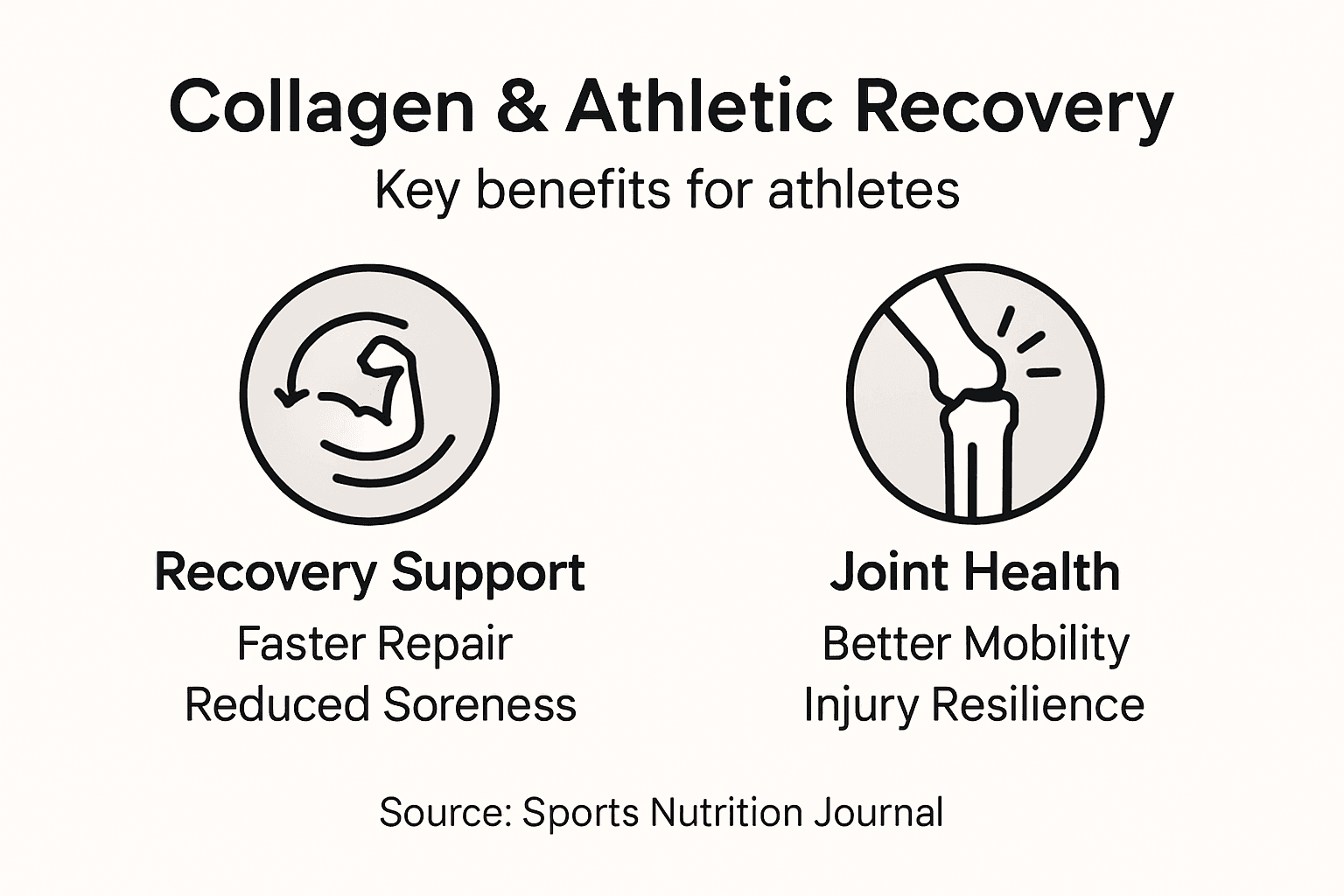
A comprehensive randomised controlled trial provides further insight into collagen’s recovery potential. Rigorous research conducted over 12 weeks demonstrated significant improvements in key recovery-related biomechanical characteristics. Athletes supplementing with specific collagen peptides experienced notable enhancements in maximal voluntary contraction, rate of force development, and jump height following muscle-damaging exercise. These findings underscore collagen’s critical role in supporting physiological repair and performance restoration.
The recovery mechanisms triggered by collagen supplementation are multifaceted. By stimulating collagen synthesis and supporting extracellular matrix remodelling, these proteins help athletes recover more efficiently, reduce muscle damage, and potentially minimise the risk of training-related injuries. The scientific evidence suggests that targeted collagen intake can be a strategic approach to accelerating post-exercise recovery and maintaining consistent athletic performance.
Pro tip: Consume collagen supplements within 30 minutes after training to maximise absorption and support optimal muscle recovery.
Supporting Joint Health and Injury Prevention
Joint health represents a critical concern for athletes seeking sustained performance and longevity in their sporting careers. Clinical research demonstrates that collagen supplementation, particularly in native and hydrolyzed forms, plays a pivotal role in supporting joint function by modulating inflammation and tissue regeneration in articular cartilage.
The protective mechanisms of collagen extend far beyond basic nutritional support. Comprehensive studies reveal that targeted collagen peptide supplementation, when combined with exercise therapy, can significantly accelerate joint injury recovery. Athletes can experience enhanced extracellular matrix regeneration, reduced joint pain, and improved structural integrity of both tendons and cartilage. These findings highlight collagen’s potential as a strategic intervention for preventing and managing sports-related joint complications.
Understanding the biochemical interactions is crucial for athletes considering collagen supplementation. The protein works by providing essential amino acids that support cartilage repair, reduce inflammatory responses, and promote more resilient connective tissue. By supporting the body’s natural healing processes, collagen helps athletes maintain joint flexibility, reduce injury risk, and potentially extend their competitive performance window.
Pro tip: Combine collagen supplementation with targeted mobility exercises to maximise joint health and injury prevention strategies.
How to Use Collagen Effectively for Athletes
Understanding the nuanced approach to collagen supplementation is crucial for athletes seeking optimal performance and recovery. Sports nutrition research recommends consuming 15-20 grams of vitamin C-enriched hydrolyzed collagen daily, strategically timed to maximise tissue remodelling and recovery potential.
Hydrolyzed collagen peptides represent the most bioavailable form for athletic supplementation. Advanced nutrition guidance suggests consuming these peptides 30 to 60 minutes before exercise, leveraging increased blood flow to enhance delivery to tendons and ligaments. Consistent daily intake of 10-15 grams can significantly support connective tissue strength and repair mechanisms, making it a valuable strategy for athletes across various disciplines.
Timing and combination are key factors in effective collagen supplementation. Athletes should pair collagen intake with vitamin C to optimise amino acid absorption and synthesis. Additionally, consuming collagen around exercise sessions can potentially enhance its uptake by connective tissues, supporting faster recovery and reduced injury risk. The biochemical process involves creating an optimal environment for protein synthesis and tissue regeneration.
Pro tip: Pair your collagen supplement with a vitamin C source like citrus fruits or berries to enhance protein absorption and tissue repair.
Below is a quick comparison of recommended collagen supplementation practices for athletes:
| Practice | Description | Benefit for Athletes |
|---|---|---|
| Hydrolysed form | Easily absorbed collagen peptides | Faster tissue delivery |
| With vitamin C | Paired for better absorption | Improved synthesis |
| Taken pre- or post-workout | Consumed around training sessions | Enhanced recovery |
| Daily consistent intake | 10-20 grams each day recommended | Supports long-term repair |
Misconceptions and Safety Considerations
Collagen supplementation is surrounded by numerous myths that require careful scientific scrutiny. Scientific research reveals a critical misconception about how collagen supplements actually work. Contrary to popular belief, these supplements do not directly deposit collagen into tissues, but instead provide amino acid building blocks that the body can utilise to produce collagen as needed.
From a safety perspective, health guidelines indicate that collagen supplements are generally well-tolerated when used appropriately. Most athletes may experience only mild gastrointestinal symptoms, which are relatively rare. However, critical considerations include selecting high-quality products with transparent sourcing and adhering to dosages consistent with clinical research recommendations. It is essential to acknowledge the current limitations in long-term research, particularly regarding usage by pregnant women and children.
Athletes must approach collagen supplementation with a balanced, evidence-based perspective. While these supplements offer potential benefits, they are not a miraculous solution for tissue repair or performance enhancement. The most effective approach involves integrating collagen supplementation as part of a comprehensive nutrition and training strategy, understanding its role as a supportive nutritional tool rather than a standalone miracle cure.
Pro tip: Consult with a sports nutritionist to develop a personalised collagen supplementation approach tailored to your specific athletic needs and health profile.
Unlock Your Full Athletic Potential with High-Quality Collagen
Athletes face challenges such as sustaining muscle and tendon strength, enhancing recovery, and preventing joint injuries. This article highlights how collagen peptides, especially hydrolysed forms, support connective tissue integrity, accelerate recovery, and reduce injury risk. If you want reliable support for your training demands and tissue repair needs, choosing the right collagen supplement is essential.
Discover our premium bovine collagen powder designed to provide the vital amino acids for tissue rebuilding and enhanced performance. At Primedge, we offer a product that complements the scientific evidence behind collagen supplementation. Combining our collagen with your training and vitamin C intake creates the perfect foundation for improved muscle and joint resilience.

Explore our collection on the Home page to find collagen powder tailored for athletes. Don’t wait to strengthen your connective tissues and accelerate recovery. Visit Primedge now and invest in your athletic future with confidence.
Frequently Asked Questions
What is the role of collagen in athletic performance?
Collagen is essential for maintaining the structural integrity of muscles, tendons, and ligaments. It provides support and resilience, which are crucial for optimising athletic performance and reducing injury risks.
How can collagen supplementation enhance recovery for athletes?
Research shows that collagen supplementation can improve post-exercise muscle recovery by enhancing tissue remodelling and reducing muscle damage. It can help accelerate recovery from intense workouts and restore performance levels more quickly.
What types of collagen are most beneficial for athletes?
The most relevant types of collagen for athletes include Type I, which provides tensile strength; Type II, which supports joint mobility; and Type III, which maintains tissue flexibility. Understanding these types can help target specific needs for performance and recovery.
How should athletes use collagen supplements effectively?
Athletes should consider taking 15-20 grams of hydrolysed collagen daily, ideally in combination with vitamin C to enhance absorption. It’s most effective when consumed 30 to 60 minutes before or after training sessions to maximise its benefits.


Leave a comment
This site is protected by hCaptcha and the hCaptcha Privacy Policy and Terms of Service apply.