

Most British skincare routines now include peptides for a reason. Peptides are not just basic protein fragments—they play a central role in promoting skin elasticity and overall health. With over 60 percent of women worldwide searching for more effective anti-ageing options, understanding peptides and their unique benefits is more important than ever. This guide clears up common misunderstandings and offers practical insights into how peptides support collagen, helping health-conscious women unlock radiant skin and lasting wellness.
Table of Contents
- Defining Peptides And Common Misconceptions
- Types Of Peptides And Their Functions
- How Peptides Interact With Collagen
- Health And Skin Benefits Of Peptides
- Safety, Legal Status, And Quality Assurance
Key Takeaways
| Point | Details |
|---|---|
| Understanding Peptides | Peptides are short chains of amino acids with unique functions, distinct from proteins, crucial for cellular communication and various physiological processes. |
| Types and Functions | Different categories of peptides, such as signalling and hormonal peptides, play specialised roles in regulating biological systems and maintaining health. |
| Peptides in Skincare | Peptides enhance skin health by stimulating collagen production and improving texture, offering advanced solutions for anti-ageing and tissue repair. |
| Regulatory Aspects | Compliance with international safety standards and quality assurance protocols is essential for peptide products to ensure efficacy and consumer safety. |
Defining Peptides and Common Misconceptions
Peptides are fascinating biomolecules that represent a fundamental building block of biological systems. Short amino acid chains form these remarkable molecules, which play critical roles across numerous physiological processes. Unlike their larger protein counterparts, peptides possess unique structural and functional characteristics that make them essential signalling molecules in cellular communication.
Understanding peptides requires recognising their precise definition and structural composition. Peptide classifications range from dipeptides to polypeptides, typically containing up to 50 amino acids connected through peptide bonds. These molecules differ from proteins primarily by their shorter length and more specialised functional profiles. Each peptide has distinctive N-terminal and C-terminal residues that determine its specific biochemical behaviour and interaction potential.
Common misconceptions about peptides often stem from confusion with proteins and uncertainty about their biological significance. Many individuals mistakenly believe peptides are simply smaller, less important protein fragments. However, research demonstrates that peptides are dynamic molecules with sophisticated signalling capabilities. They regulate complex processes including cellular growth, metabolic responses, and stress mechanisms across multiple biological systems. Their compact size enables them to perform targeted interactions that larger protein structures cannot achieve.
Pro tip: When exploring peptide benefits, consult scientific literature and focus on understanding their specific molecular characteristics rather than generalising them as simple protein components.
To help clarify how peptides differ from proteins in biological systems, consider the following comparison table:
| Property | Peptides | Proteins |
|---|---|---|
| Typical Length | 2–50 amino acids | Over 50 amino acids |
| Structure Complexity | Simple chains or short sequences | Complex folded structures |
| Main Functions | Cell signalling, regulation | Catalysis, structural support |
| Example | Insulin, endorphins | Collagen, enzymes |
Types of Peptides and Their Functions
Peptides represent a diverse molecular landscape with multiple functional classifications that play critical roles in biological systems. These remarkable molecules emerge through various biological pathways, including translation of short genetic sequences, enzymatic synthesis, and precursor protein modifications. Their intricate diversity allows them to serve as versatile molecular messengers with specialised functions across different physiological domains.
Biological peptide categories encompass several key types that demonstrate remarkable functional specificity. These include:
- Signalling Peptides: Regulate intercellular communication
- Hormonal Peptides: Control metabolic processes (e.g., insulin)
- Neuropeptides: Modulate neurological responses (e.g., endorphins)
- Antimicrobial Peptides: Provide immune defence mechanisms
- Enzyme Inhibitor Peptides: Modulate enzymatic activities
Each peptide category exhibits unique characteristics that enable targeted biological interactions. For instance, hormonal peptides like insulin precisely regulate glucose metabolism, while antimicrobial peptides such as defensins provide immediate immune protection by disrupting bacterial cell membranes. Their compact molecular structure allows for rapid, efficient signalling that larger protein molecules cannot achieve.
Understanding these diverse peptide types reveals their profound importance in maintaining physiological balance. From regulating cellular growth to managing stress responses, peptides demonstrate extraordinary versatility. Their potential applications in medical research and therapeutic interventions continue to expand, offering promising avenues for targeted treatment strategies across multiple health domains.
Pro tip: Explore scientific literature focusing on specific peptide types to gain deeper insights into their unique molecular mechanisms and potential therapeutic applications.
How Peptides Interact with Collagen
Collagen peptides represent a sophisticated molecular mechanism for enhancing cellular regeneration and structural integrity. Collagen protein interactions demonstrate remarkable complexity, functioning far beyond simple structural support. These peptides actively communicate with biological systems, influencing critical processes such as wound healing, cellular differentiation, and tissue maintenance.
The intricate interaction between peptides and collagen becomes particularly fascinating when examining their skin health mechanisms. Specific collagen peptides stimulate crucial biological responses by:
- Increasing collagen synthesis rates
- Enhancing fibroblast viability
- Promoting extracellular matrix formation
- Supporting gene expression related to elastin production
- Regulating cellular metabolism
These molecular interactions reveal how peptides act as precision communicators within biological systems. By triggering specific genetic responses, they essentially ‘instruct’ cells to produce more collagen, improve skin elasticity, and support tissue regeneration. Their compact size allows for rapid cellular signalling that larger protein molecules cannot achieve, making them extraordinarily efficient biological messengers.

Understanding these mechanisms provides profound insights into how targeted peptide interventions might support long-term skin health and tissue maintenance. The ability of collagen peptides to directly influence cellular behaviour represents a groundbreaking approach to understanding regenerative processes at the molecular level.
Pro tip: Consider consulting scientific literature to understand how specific peptide sequences might uniquely interact with your body’s collagen production mechanisms.
Health and Skin Benefits of Peptides
Peptides emerge as sophisticated molecular agents with profound implications for skin health and cellular rejuvenation. Peptide skincare mechanisms represent a cutting-edge approach to addressing multiple dermatological concerns through targeted biological interventions. These remarkable molecules work at the cellular level, offering nuanced solutions for skin regeneration and protection that traditional skincare approaches cannot match.
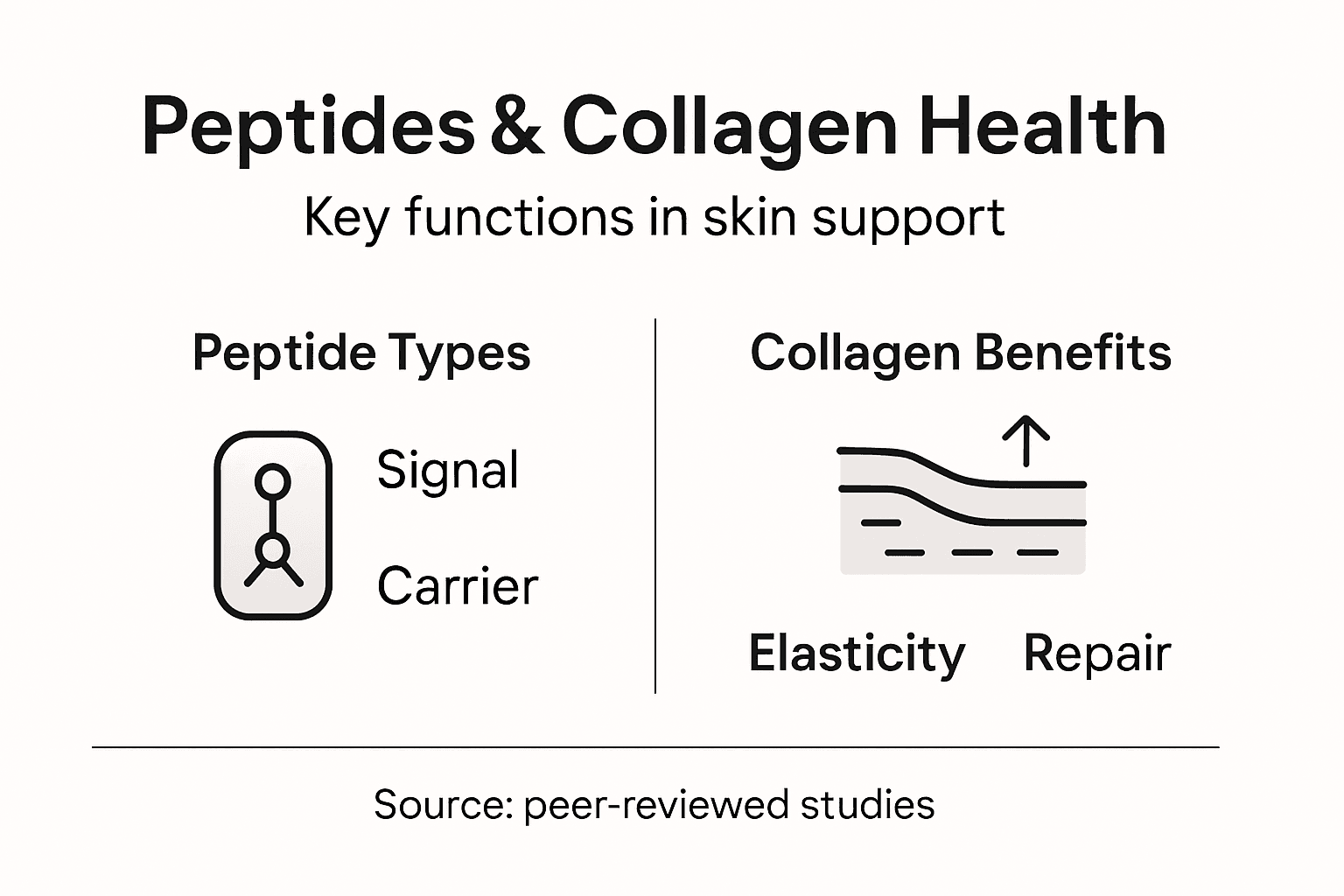
The diverse classifications of peptides provide targeted benefits across multiple skin health dimensions:
- Signal Peptides: Stimulate collagen production
- Carrier Peptides: Transport essential minerals
- Neurotransmitter Inhibitor Peptides: Reduce muscle tension and fine lines
- Enzyme Inhibitor Peptides: Prevent breakdown of skin proteins
Research demonstrates that topical peptide treatments can dramatically improve skin quality by addressing multiple concerns simultaneously. They work by stimulating collagen deposition, accelerating cellular repair, and enhancing overall skin texture. Their ability to penetrate skin layers and trigger specific genetic responses makes them extraordinarily powerful in combating signs of ageing, reducing inflammation, and supporting natural skin regeneration processes.
The scientific potential of peptides extends beyond cosmetic applications, suggesting promising therapeutic approaches for wound healing, skin repair, and potentially managing age-related dermatological changes. Advanced delivery techniques, including nanoformulations, are continually improving peptide bioavailability, making these molecular messengers increasingly effective in skincare and regenerative medicine.
Pro tip: Consult with a dermatological professional to develop a personalised peptide skincare strategy tailored to your specific skin requirements and genetic profile.
Below is a summary table illustrating how different peptide categories contribute to skin health:
| Peptide Category | Role in Skin Health | Typical Use Case |
|---|---|---|
| Signal Peptides | Boost collagen and tissue formation | Anti-ageing skincare |
| Carrier Peptides | Deliver trace elements to skin cells | Enhanced absorption treatments |
| Neurotransmitter Inhibitors | Minimise lines by reducing muscle tension | Wrinkle prevention products |
| Enzyme Inhibitors | Protect collagen from breakdown | Skin firmness preservation |
Safety, Legal Status, and Quality Assurance
Navigating the complex landscape of peptide regulation requires a comprehensive understanding of international safety standards and legal frameworks. European regulatory guidelines provide rigorous protocols for ensuring peptide product safety, emphasising meticulous characterisation, impurity control, and manufacturing transparency.
Key regulatory considerations for peptide products include:
- Comprehensive chemical characterisation
- Detailed manufacturing process documentation
- Rigorous stability testing protocols
- Impurity control and assessment
- Safety and efficacy verification
Clinical pharmacology considerations highlight critical aspects of peptide product development. Regulatory bodies like the FDA mandate thorough assessments of pharmacokinetics, potential drug interactions, immunogenicity, and safety profiles. These guidelines ensure that peptide products meet stringent quality standards before reaching consumers, protecting public health through systematic evaluation and monitoring.
Quality assurance in peptide production extends beyond regulatory compliance. Manufacturers must implement sophisticated analytical techniques to verify molecular integrity, assess potential contaminants, and guarantee consistent product performance. This involves advanced testing methodologies, including mass spectrometry, nuclear magnetic resonance, and chromatographic analyses to validate peptide purity and structural accuracy.
Pro tip: Always request comprehensive third-party laboratory testing results when considering peptide supplements to ensure maximum safety and quality.
Enhance Your Collagen Health with Premium Peptide Support
Understanding the vital role peptides play in stimulating collagen synthesis and improving skin elasticity highlights an important challenge for many seeking effective skin regeneration. The article reveals how collagen peptides actively promote cellular repair and maintain tissue integrity, directly addressing concerns about skin ageing and loss of firmness. If you want to harness these scientific insights and experience the benefits of targeted peptide interactions on your skin health, high quality collagen supplementation is a key solution.
Discover our premium collagen powder products crafted from bovine sources that deliver potent peptide support to amplify your body’s own collagen production.

Unlock radiant, youthful skin by incorporating expertly sourced collagen peptides into your daily regimen. Visit Primedge now and explore our range designed to enhance skin elasticity and tissue regeneration. Take the next step toward healthier skin with reliable, pure collagen powder and experience the difference today at our Home page. Begin your journey to vibrant skin with proven peptide solutions.
Frequently Asked Questions
What are peptides and how do they relate to collagen health?
Peptides are short chains of amino acids that play crucial roles in biological functions, including the stimulation of collagen production. They enhance skin health by promoting tissue regeneration and maintaining collagen levels, improving skin elasticity and overall appearance.
How do collagen peptides specifically enhance skin health?
Collagen peptides promote skin health by increasing collagen synthesis, enhancing fibroblast viability, and supporting the formation of the extracellular matrix. This leads to improved skin elasticity and potential reduction in visible signs of ageing.
What are the main types of peptides used in skincare products?
The main types of peptides in skincare include signal peptides, which stimulate collagen production; carrier peptides, which transport essential minerals; neurotransmitter inhibitor peptides, which reduce muscle tension; and enzyme inhibitor peptides, which help to prevent the breakdown of skin proteins.
Are peptide-based skincare products safe to use?
Yes, peptide-based skincare products are generally safe when formulated correctly and backed by scientific research. It is important to consult with dermatological professionals and ensure that products undergo rigorous quality assurance and testing to guarantee safety and efficacy.


Leave a comment
This site is protected by hCaptcha and the hCaptcha Privacy Policy and Terms of Service apply.